
West Park Takes Root: A Tree Plan in Action


Program History & Philosophy
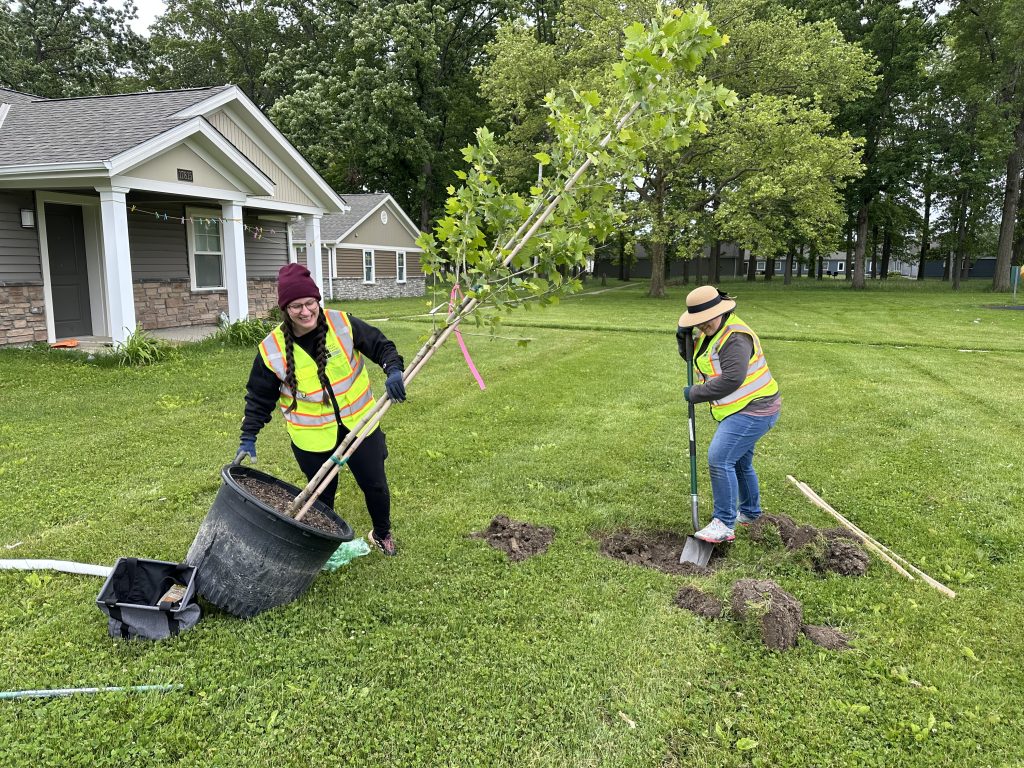
WPKND is intentionally focusing its tree planting efforts on the southern end of our service area, where canopy coverage is lowest and environmental burdens are highest. One key area is CMHA Riverside Park, a neighborhood that is home to many families but has very few trees. Our first effort to improve the tree canopy here was through Cuyahoga County’s Healthy Urban Tree Canopy Grant, where we received approximately $55,000 to plant and maintain 65 trees at Riverside Park and offer free plantings to local homeowners in our priority area. In addition, the funding was used to create a Neighborhood Tree Plan, which helped create a roadmap on where future plantings could take place. You can read more about this report here.
While our service area as a whole has one of the highest tree canopy percentages in the City of Cleveland, this coverage varies significantly across the area. The northern portion has mature, healthy trees that provide strong shade, while the southern portion, particularly areas near the airport, has seen a sharp decline in canopy coverage.
This disparity is especially concerning because it affects residents who are more likely to be low-income, non-white, and non-native English speakers. Many families with young children call Riverside home, yet they lack access to the same quality of tree canopy that residents just 1.5 miles north benefit from every day. In addition, Riverside is uniquely challenged by its location between Cleveland Hopkins Airport and Interstate 71, exposing residents to high levels of noise and pollution.
Historically, our organization has overlooked this area. Through our tree planting work, we aim to correct that and build stronger ties between Riverside, WPKND, and the broader West Park community.
In 2025, WPKND was awarded $65,000 from the Cleveland Tree Coalition (CTC) to continue planting trees in the southern part of Ward 17. CTC is a group of public, private, and community partners working with the City of Cleveland to grow and care for new trees in Cleveland. Guided by the Cleveland Tree Plan, the coalition seeks to increase the city’s tree canopy from 18 percent to 30 percent by 2040, helping to create greener, healthier, and more equitable neighborhoods.
We also plan to plant at Maplewood Park, a well-loved recreational space at the southernmost end of Ward 17, adjacent to the airport. The Hopkins neighborhood has a mere 8% canopy coverage. Maplewood is a vital community asset, particularly for the kids participating in the Puritas Baseball League during the summer months. Maplewood Park was also identified as a priority planting site in the West Park Tree Plan, developed in late 2024 by Davey Resource Group. This plan serves as a strategic roadmap for increasing tree canopy coverage in the southern end of Ward 17. This project aligns with our broader mission to strengthen our community, create healthier public spaces, and promote environmental equity throughout our neighborhood.
Neighborhood Tree Plan
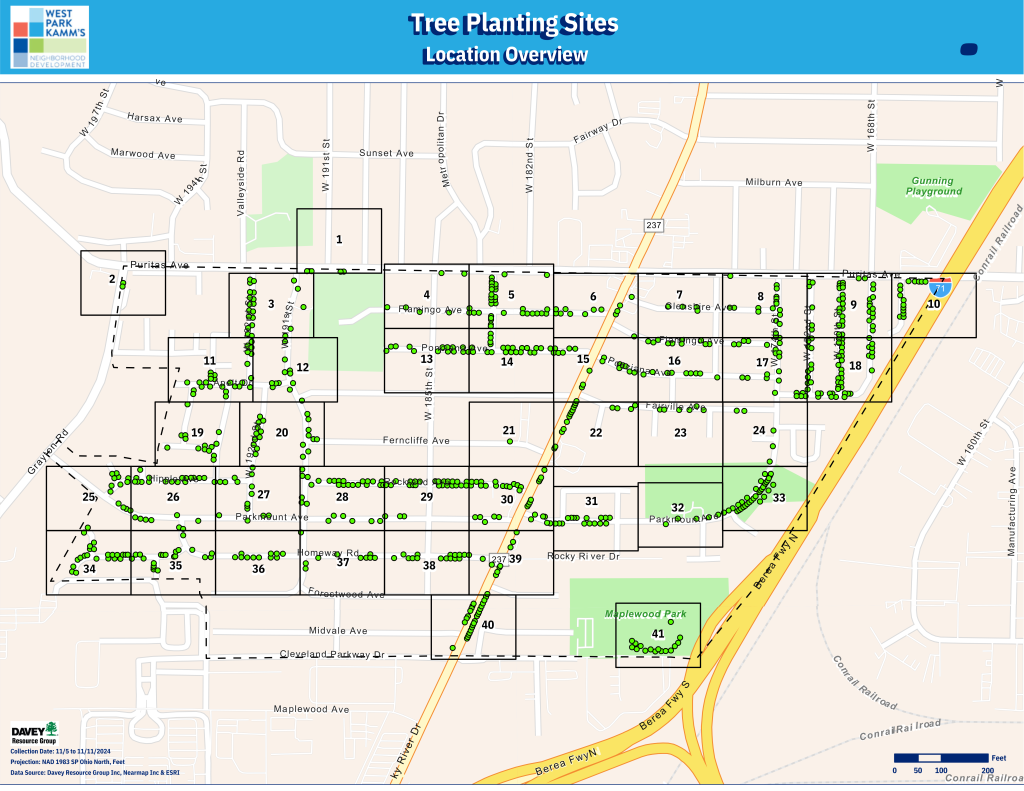
In December 2024, West Park Kamm’s partnered with Davey Resource Group to develop a Neighborhood Planting Plan, funded by Cuyahoga County’s Healthy Urban Tree Canopy Grant. This plan focuses on the southern end of Ward 17, south of Puritas Avenue, identifying opportunities to plant trees, which provide benefits such as shade, beauty, and cleaner air. Why does this matter? The southern portion of our neighborhood has lost significant tree cover over time, leaving streets without shade and the many benefits trees provide. This plan serves as a roadmap for restoring the tree canopy, helping West Park Kamm’s make informed decisions and pursue funding for future plantings. A greener, healthier neighborhood is the goal, and this plan is a critical step toward making it happen.
The plan emphasizes smart planting strategies, following the Arbor Day Foundation’s “right tree, right place” approach. Choosing trees that fit their surroundings prevents conflicts with sidewalks, foundations, and utility lines, which are common issues that have led to the removal of otherwise healthy trees.
A total of 739 planting sites were surveyed in the public right-of-way. Each site was evaluated for space, proximity to homes, and overhead utilities. DRG experts then recommended the size of tree that would be most suitable. Most locations identified are best suited for smaller trees, which reach 10-25 feet when mature. Flowering dogwood, eastern redbud, and crabapple, among others, are generally suitable for small patches of lawn with overhead utilities, such as a tree lawn. The plan also highlights that modifying infrastructure, such as reducing large areas of concrete, could create space for larger trees, including ginkgo, oak varieties, and bald cypress. In many cases, larger trees provide greater ecological benefits, such as improved air quality, carbon sequestration, and stormwater management. While a group of smaller trees can also offer valuable services, a single large tree often delivers more benefits per square foot of canopy coverage.
Overall, this plan lays the groundwork for West Park Kamm’s to expand the neighborhood’s tree canopy, but it should remain flexible. As a living document, it will adapt to the evolving landscape and community needs. To learn more about the findings and recommendations, we encourage you to read the full Neighborhood Planting Plan here.
West Park Tree Stewards
Meet the West Park neighbors who are helping us maintain the newly planted trees!
Tina Dudley
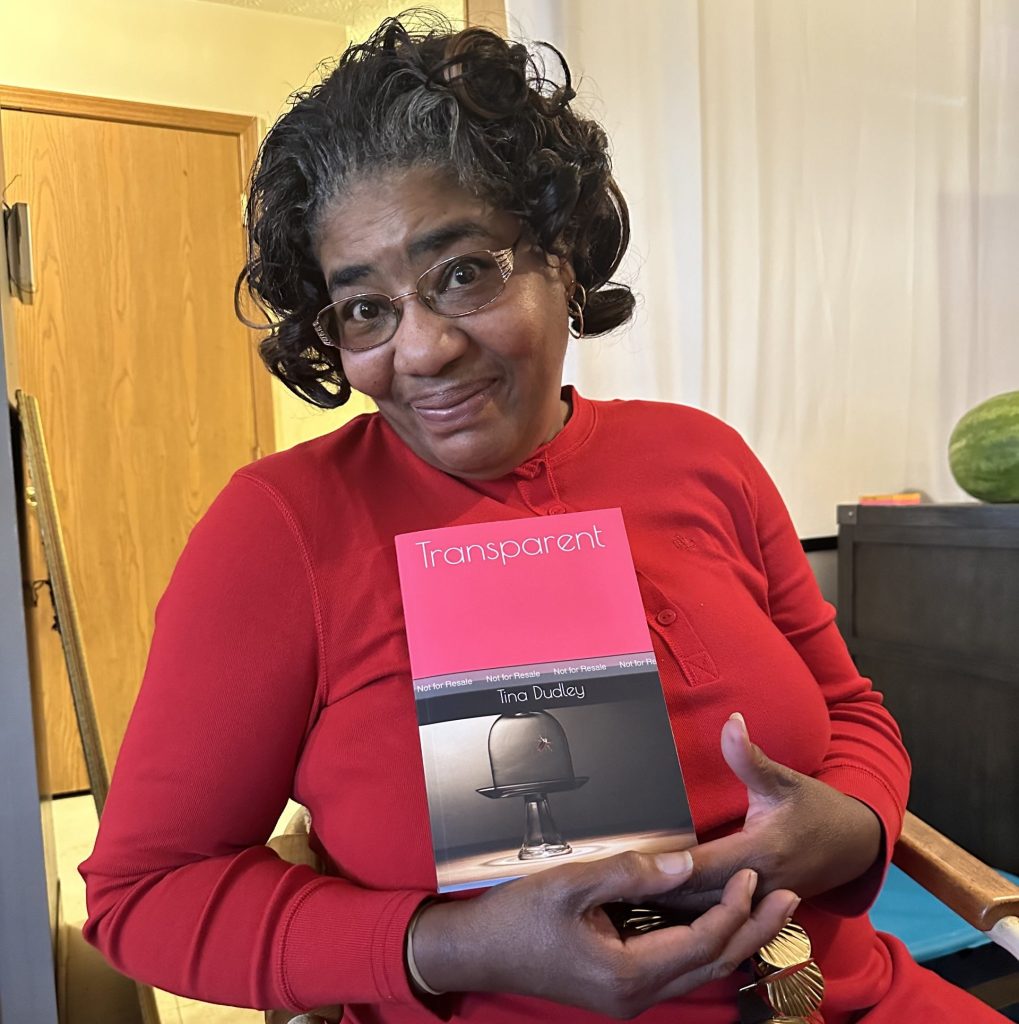
Tina has only lived in West Park for 6 months. She wanted to give back to the community and is very excited to support the growing of these trees.
Whitley Hatmaker
Hailing from East Tennessee Whitley was surrounded by nature and the outdoors growing up, whether it was going for walks in the nearby woods, or gardening. They continue to connect with nature and enjoy bringing that to others. When they are not outside, you’ll find them knitting, cooking, studying for school, listening to a book, or hanging out with friends.


Danielle Huryn
Danielle has lived in West Park for the last five years. While she’s always been supportive of green initiatives, her graduate coursework surrounding conservation is what pushed her to look for a way to become directly involved in community projects. She is excited to have a hand in restoring Cleveland’s tree canopy!
Chris Gervelis
Chris is not originally from Cleveland, and just two years ago was living on a sailboat in Maine. He found himself in Cleveland after moving to be closer to his daughter, one of two kids that he has. He enjoys music, nature, art, antiques and sports. Chris is excited to get outside and support his new community.

Anthony Gusman
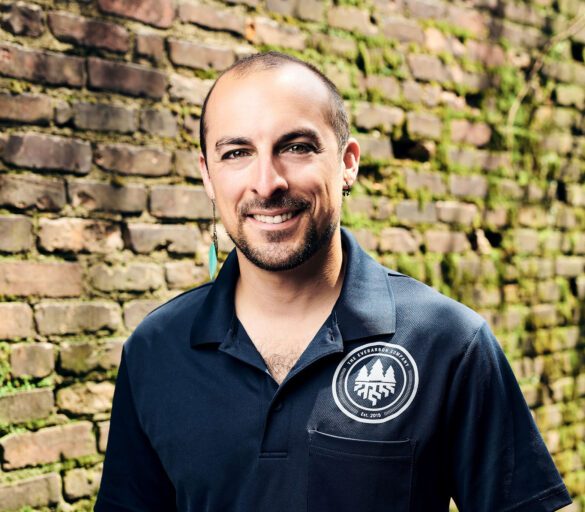
Anthony grew up on Cleveland’s west side, right along the Metroparks, where he gained an appreciation for the woods and nature. He graduated in Environmental Science, and served two years in AmeriCorps programs working in National Parks and Wildernesses from Minnesota to Montana. While there his drive for environmental service and conservation only grew. He has spent almost an entire decade working in the outdoors taking care of plants. After living in several different cities, most of which are concrete jungles, he has a much greater appreciation for the unique nature of the Forest City. During the day, he works as a professional arborist, continually training in new ways of tree and plant care in service of the Forest City
Danny McLaughlin
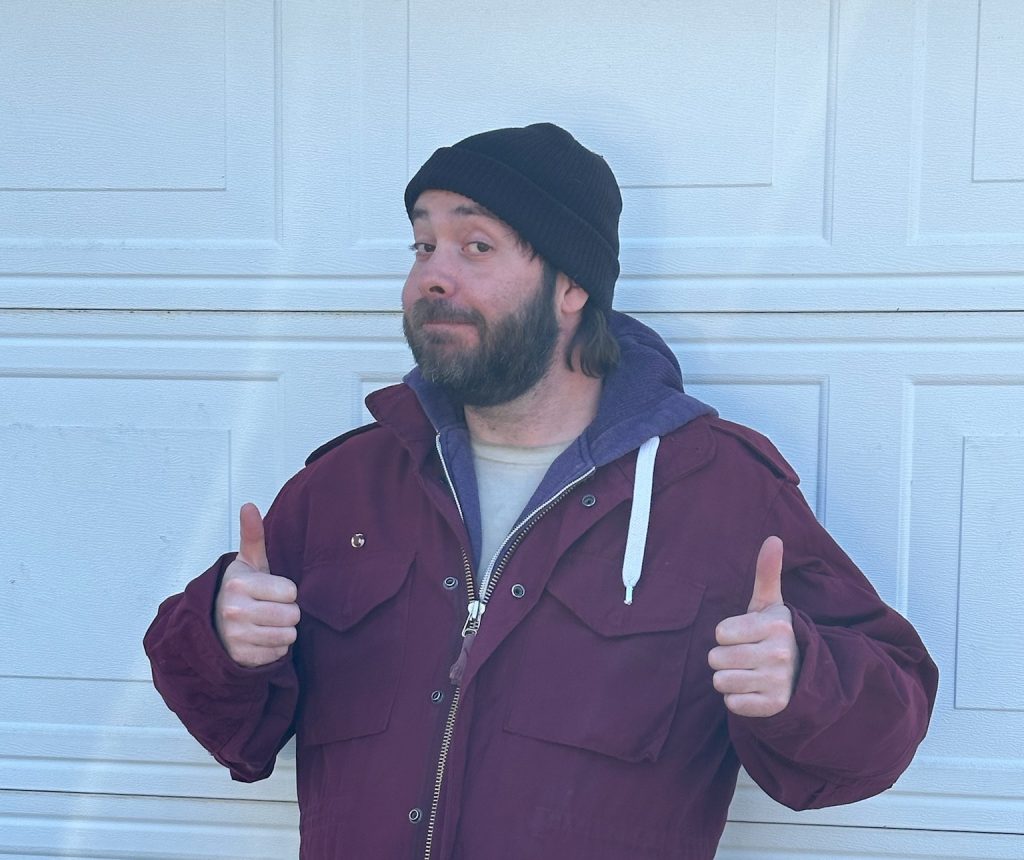
Danny is an eight-year West Park resident with an interest in trees and the benefits of neighborhood trees. In 2019 he completed the Tree Steward training program at Blessed Trinity. Since then, he’s helped with several tree planting and tree care projects around town and is also an active volunteer with the Bountiful Basement food pantry.
Rachel Metz
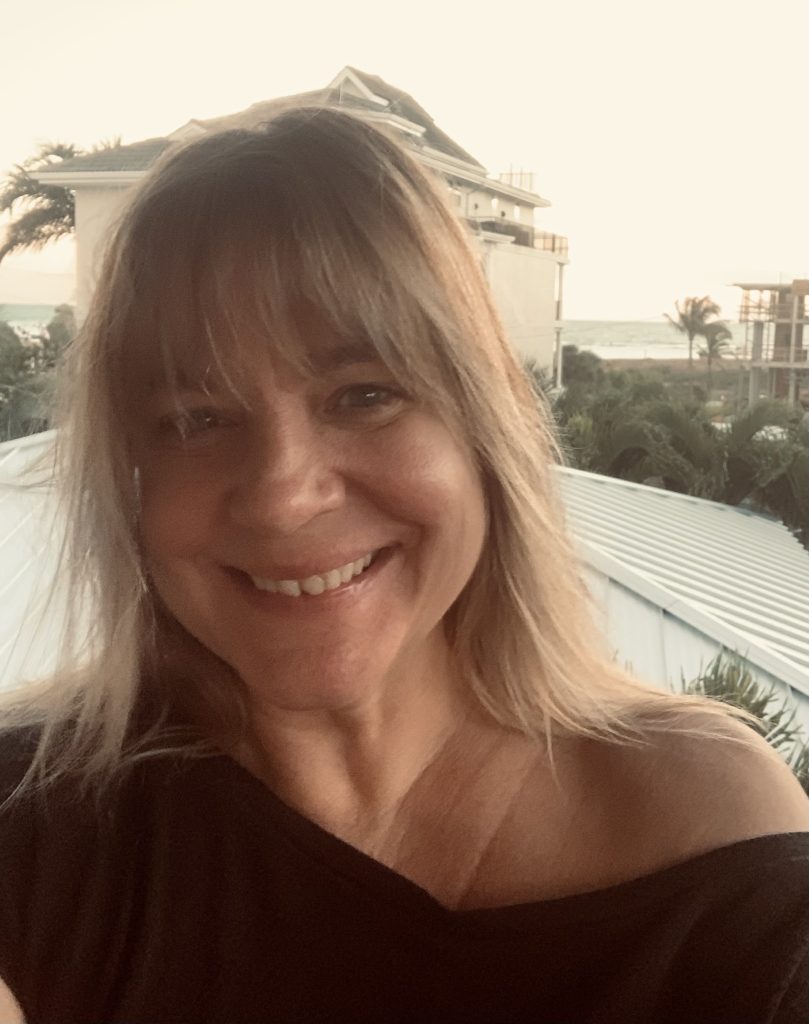
Rachel moved to Westpark 2 years and loves the vibrant community here. She is passionate about both nature and the environment, and the work as a tree steward was a natural fit. She is also a yoga instructor along with many other wellness modalities, and she finds this work seamlessly weaves together the importance of fostering connection in the community and while caring for the health of outdoor space and the tree canopy.
Lindsey Schneider
Lindsey is a new resident of West Park and a yoga teacher at Studio West Park. As a yoga instructor, she enjoys helping people build resilience and autonomy through mindful, physical movement. She recently moved to West Park to be closer to family and saw the Tree Steward position as a great way to connect with her new community and spend the summer outdoors tending to trees. Previously, Lindsey has worked in environmental conservation with Cuyahoga Soil & Water Conservation District and the Western Reserve Land Conservancy, where she used her background in Geographic Information Systems to map conservation efforts and assist in environmental education programming across Cleveland. In her free time, she enjoys gardening with her husband, cooking, and worshipping her dog.
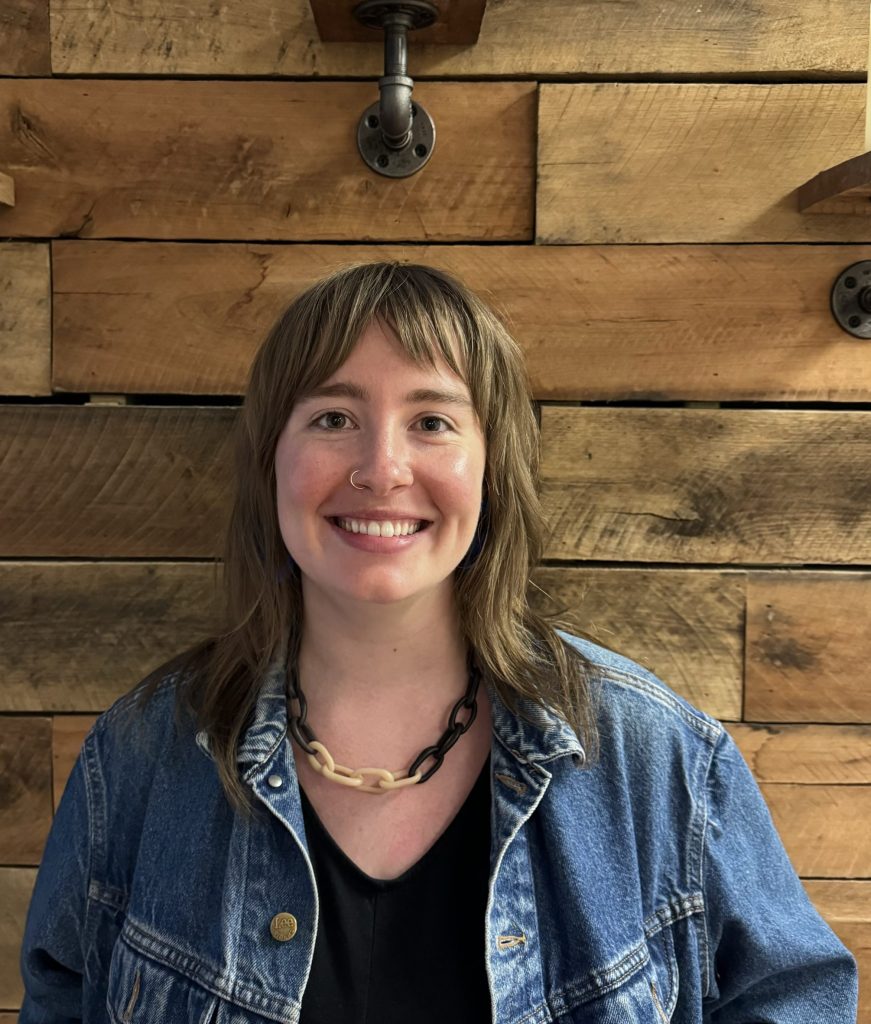
Colby Sattler – Partner Arborist, Forest City Ecological Services

Colby has been working with WPKND throughout all of our tree work. After years in the non-profit sector, Colby got his hands dirty and got his ISA certification. Colby’s business, Forest City Ecological Services, was created to help address the dwindling tree canopy of our region. This is what he had to say about our work together “Neighborhood planning and tree planting efforts are at the core of what we do and our work with West Park Kamm’s Neighborhood Development is a prime example of this important investment in people and places. The opportunity to work for the amazing people of West Park and do our part to ensure it remains a charming and welcoming place to live is one our most rewarding endeavors to date! Thank you, West Park!!!”
What are we planting?
Click to learn more!
Autumn Blaze Maple | Acer × freemanii

Image courtesy of Utah State University

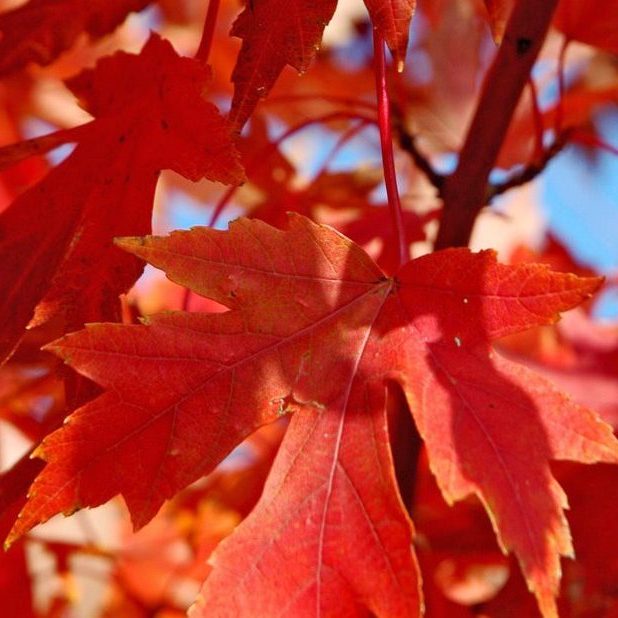
- Origin: Hybrid of Red and Silver Maple, selected in Ohio by nurseryman Glenn Jeffers in the late 1960s
- Size at maturity:
- Height: 40–60 ft
- Spread: 30–40 ft
- Urban forestry benefits:
- Adapts well to Northeast Ohio’s clay-heavy soils and variable rainfall.
- Fast canopy cover for streets, parks, and campuses.
- Resilient against pollution and road salt.
Exclamation!™ London Planetree | Platanus × acerifolia
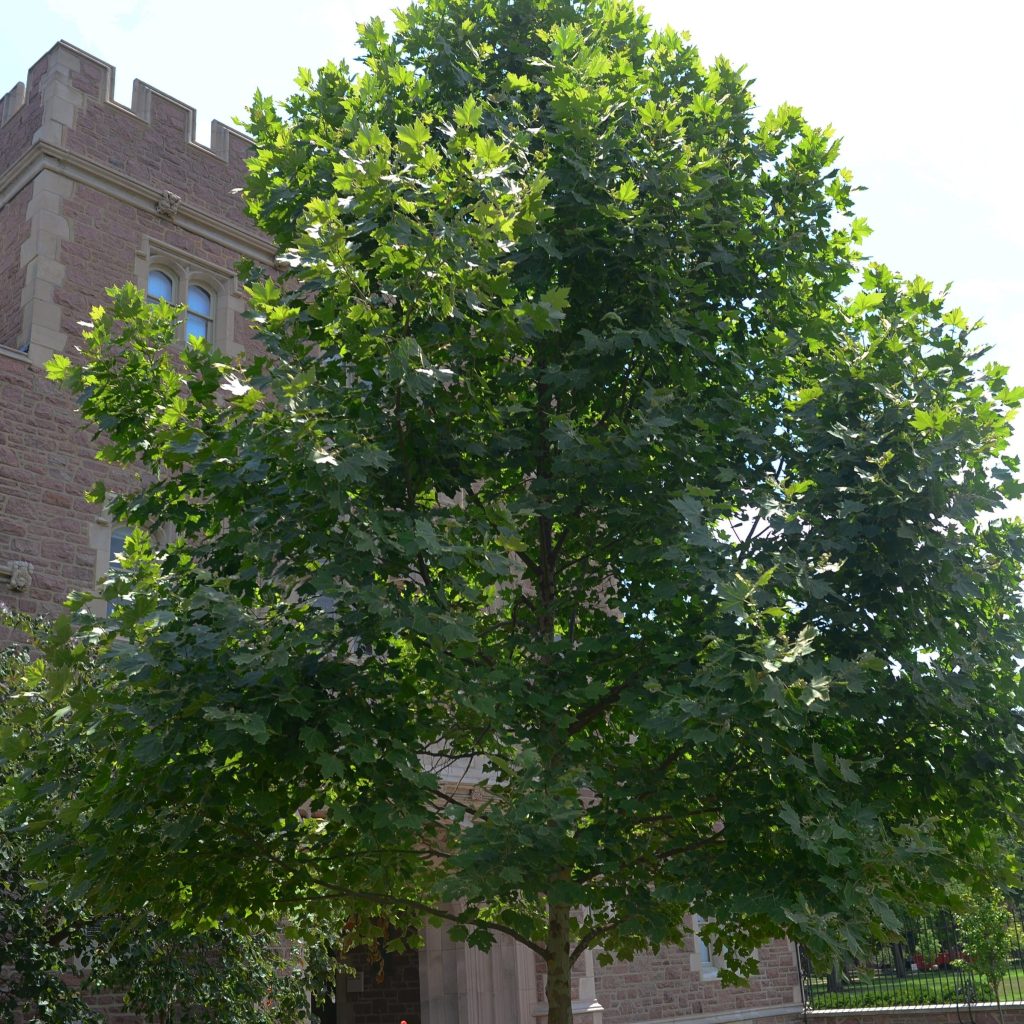
Photo courtesy of WashU Arboretum

Image courtesy of the Morton Arboretum

Image courtesy of the Morton Arboretum
- Origin & breeding: A hybrid between American sycamore and Oriental planetree, selected at Morton Arboretum (IL) for anthracnose (fungal disease) and frost-crack resistance
- Size at maturity:
- Height: 55–65 ft
- Spread: 40–50 ft
- Urban forestry benefits:
- Ideal canopy size for city streets or parks without overwhelming space.
- Provides light shade and seasonal interest with minimal fruit litter.
- Resilient to Northeast Ohio’s salt, pollution, and clay-heavy soils.
Swamp White Oak | Quercus bicolor

Image courtesy of Warren County, KY

Image courtesy of Utah State University
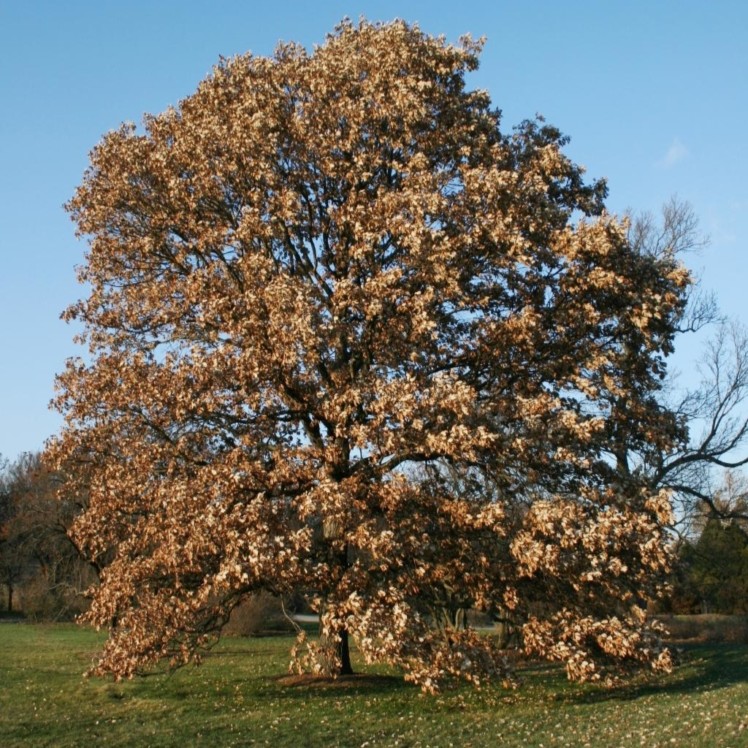
Image courtesy of the Morton Arboretum
- Origin: Native to North-Central and Northeastern U.S., including northern Ohio—thrives in lowlands and stream edges
- Size at maturity:
- Height: 50–80 ft (commonly 60 ft)
- Spread: 45–60 ft
- Soil & moisture tolerance:
- Prefers moist soils; tolerates drought, compaction, urban stress, and road salt
- Urban forestry benefits:
- Well-suited to clay-heavy, compacted soils and variable moisture, which is common in Cleveland.
- Offers large canopy for shade in parks and right-of-ways; the expansive root system helps manage stormwater.
- Durable under urban stresses (pollution, salt, compaction) and low-maintenance once established.
Tulip Poplar | Liriodendron tulipifera

Image courtesy of Utah State University
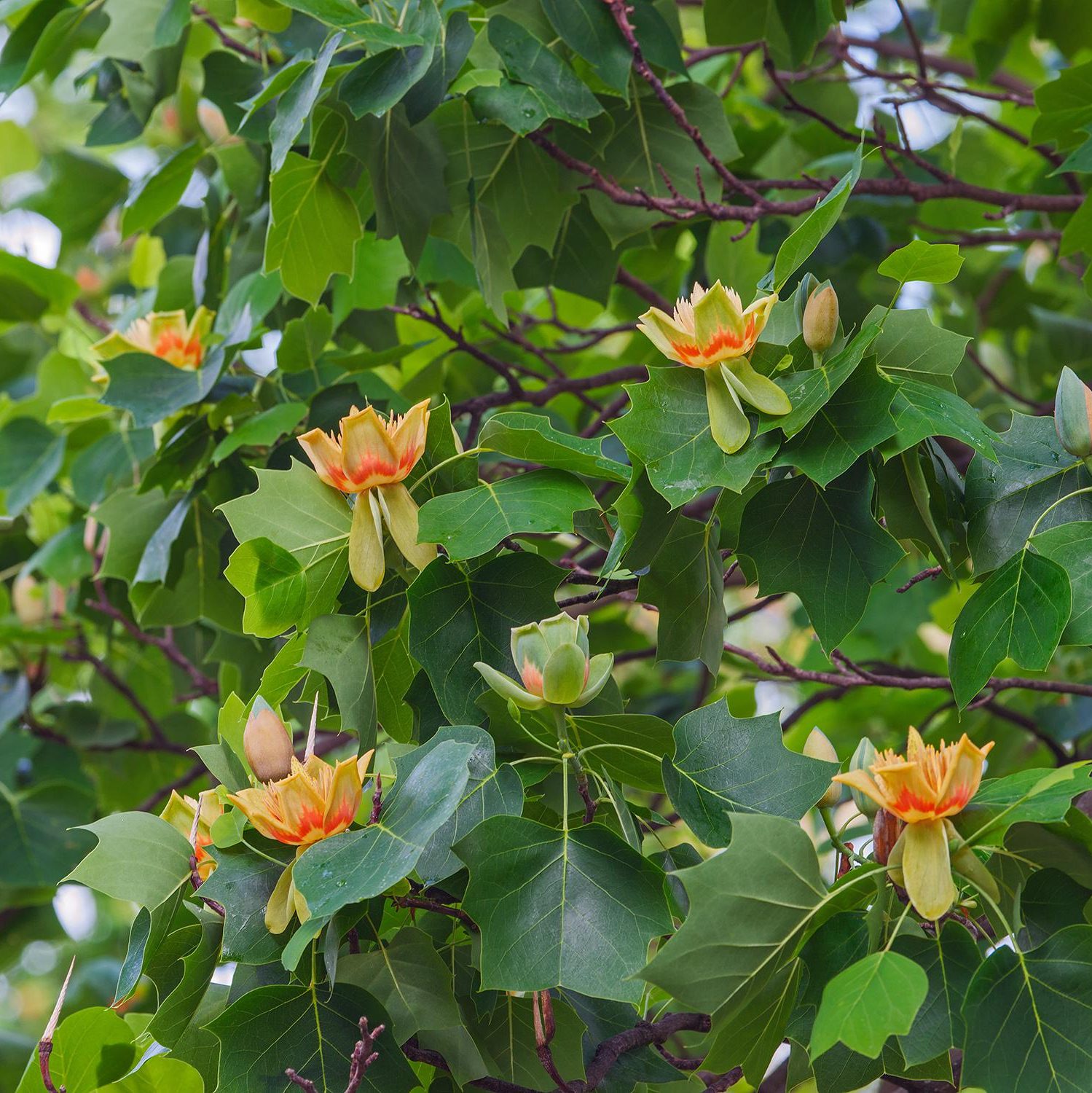
Image courtesy of Adobe Stock Images

Image courtesy of the University of Utah
- Origin: Native to eastern North America, including Ohio
- Size at maturity:
- Height: 60-120 ft
- Spread: 30-50 ft
- Has tulip-like flowers in the spring, but is not at all related to the tulip flower.
- Urban forestry benefits:
- Fast-growing and provides quick shade for parks and streets.
- Adapts well to Cleveland’s clay soils and variable moisture.
- Supports pollinators with its flowers; seeds feed wildlife.
Dawn Redwood | Metasequoia glyptostroboides

Image courtesy of the University of Utah

Image courtesy of the University of Georgia

Image courtesy of the University of Utah
- Origin: Native to central China; once thought extinct until rediscovered in the 1940s.
- Size:
- 70–100 ft tall with a 25–35 ft spread.
- Growth Habit: Fast-growing, pyramidal shape; soft, feathery needles turn orange-brown in fall.
- Why it works in Cleveland:
- Handles clay soils, wet spots, and air pollution