
Mastering Home Repairs: A Recap of 4 Essential Workshops




Whether you're a seasoned DIY enthusiast or just getting your feet wet in home repairs, knowledge is key to feeling confident tackling projects around the house. Recently, the WPKND office had the pleasure of hosting the Home Repair Resource Center for a series of workshops designed to help homeowners of all skill levels sharpen their practical skills. From power tools to plumbing, these workshops covered a range of topics that are essential for anyone wanting to get hands-on with their home maintenance. Here's a recap of each session:
- Power Tools 101
The first workshop was an absolute game changer for anyone intimidated by the world of power tools. Whether you’ve used a drill or never picked up a saw in your life, this session had something for everyone.
The instructors walked through different types of power tools, including drills, saws, sanders, grinders, and nail guns. We learned how to properly hold and operate each tool, safety tips (like always wearing safety goggles!), and how to choose the right tool for different projects. Hands-on time was invaluable – they got to practice drilling, cutting, and sanding.
Key Takeaways:
- Always prioritize safety: check the tool and workspace before starting.
- For small drilling tasks, a cordless drill is your best friend.
- Know when to use a circular saw vs. a jigsaw to get clean cuts on wood.
- Carpentry and Drywall Basics
Next up, carpentry and drywall basics. This is a critical skill for anyone looking to improve their space or take on bigger home projects. The workshop kicked off with a deep dive into the basics of framing, cutting, and installing drywall. We learned about the different types of wood used in framing and how to measure and cut accurately. Then, folks got to put their skills to the test by framing out small sections of wall
A big part of the workshop focused on hanging and finishing the drywall properly. From cutting the sheets to securing them with screws and finishing the edges with tape and compound. The instructors finished with installing baseboard using a miter saw and also gave an overview on using the compound function of the saw to cut crown mounding.
Key Takeaways:
- Measure twice, cut once. Accuracy is key when working with wood and drywall.
- Mastering the technique of applying joint compound is crucial for smooth, seamless finishes.
- Painter’s caulk and wood filler are your friend when installing baseboard & trim.
- Electrical Basics: Switches and Plugs
Electrical work is often one of the most intimidating aspects of home repair, but it doesn’t have to be. In the "Electrical Basics: Switches and Plugs" session, instructors covered the essentials of safely working with electricity. Then focused on installing, replacing, and troubleshooting light switches and electrical outlets.
The workshop began with a discussion on safety precautions. Such as, turning off power at the breaker before starting any electrical work. We then moved into the nitty-gritty of wiring a new outlet and installing a light switch. The hands-on experience was invaluable, as folks got to practice stripping wires, making connections, and testing the installations.
Key Takeaways:
- Always double check that power is off before touching any wires.
- Use a voltage tester to ensure the circuit is not live.
- Understand the different wire colors (black = hot, white = neutral, green = ground).
- Plumbing Basics: Faucets and Toilets
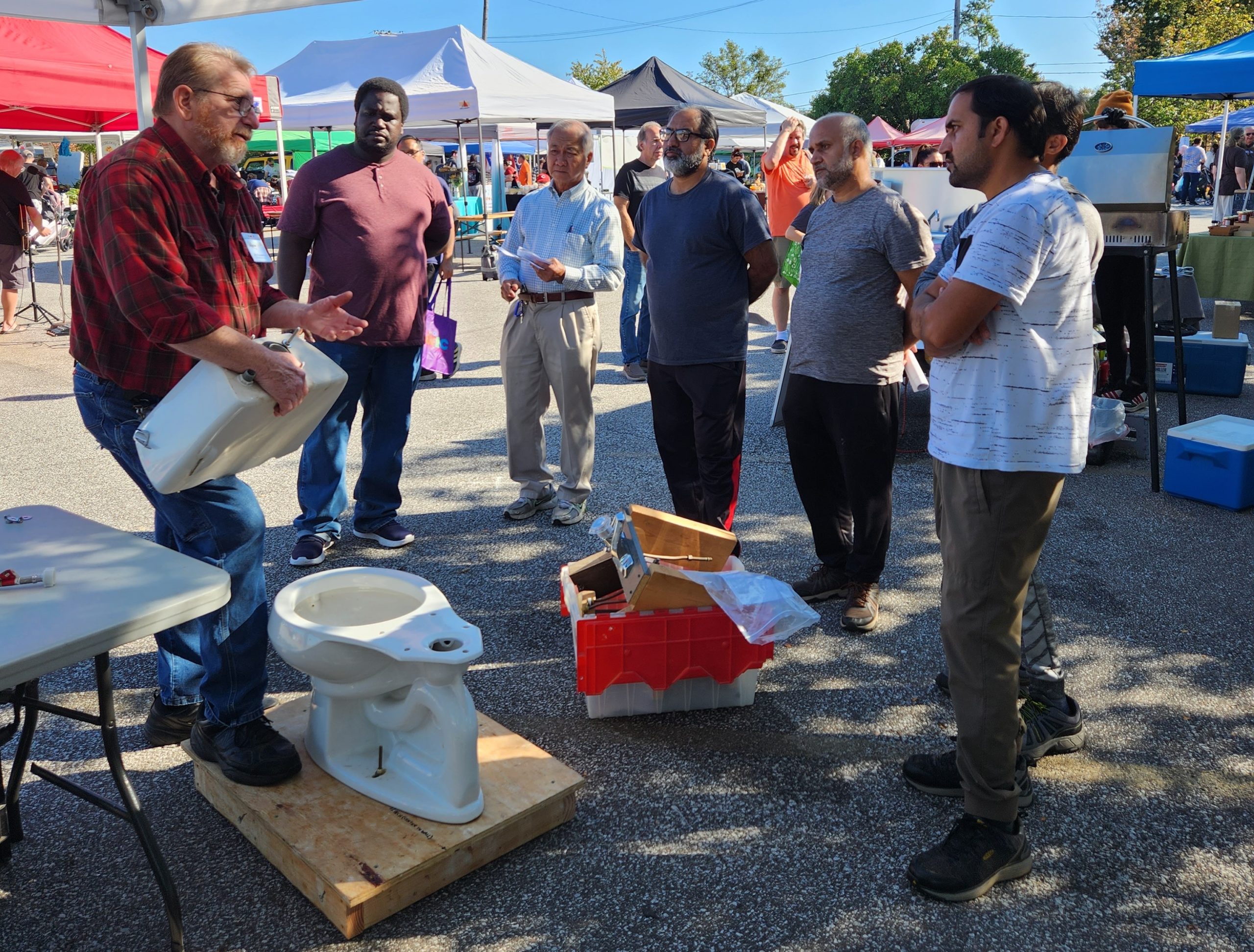
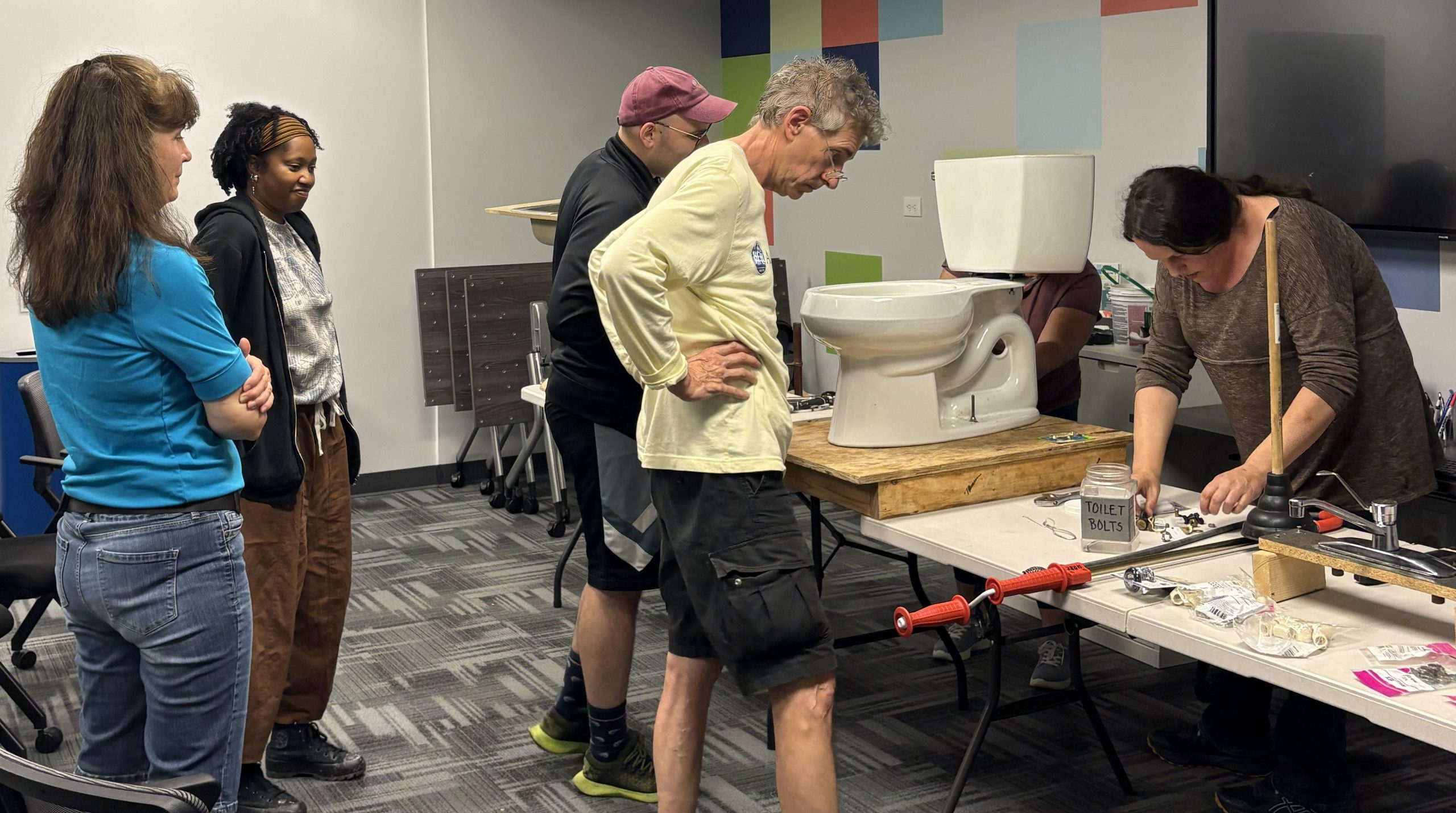
Finally, the last workshop focused on plumbing, a crucial skill that often saves time and money in home repairs. This session centered on basic tasks like replacing faucets and repairing toilet components. The instructor broke down the inner workings of both faucets and toilets, showing how to disassemble and replace parts like washers, cartridges, and seals.
The class learned how to handle common plumbing problems like a leaky faucet, running toilet, and even how to replace the wax ring and properly install a new toilet.
Key Takeaways:
- Kunselman’s Law: Never start a plumbing project after the hardware store has closed.
- If your toilet is constantly running, check the flapper, float, or fill valve (these are often the culprits).
- Always shut off the water supply before starting any plumbing work.
Final Thoughts:
Workshop time is my favorite time of the year! These sessions are designed to empower homeowners to take on a variety of home repair tasks. The hands-on experience, along with the expert tips and tricks, provided a solid foundation that anyone can build on. Whether you're looking to hang a picture frame, fix a leaky faucet, or install a new outlet, these workshops proved that with the right tools and knowledge, home repair doesn’t have to be overwhelming.
What was your favorite part of the workshop? Or is there a DIY skill you’re excited to learn next? Drop a comment below and let’s keep the conversation going!
-CJ Demchak